Showing posts with label sciTech. Show all posts

Tuesday, March 7, 2017

Facebook Zero and the "People's Receiver"

March 7, 2017 (Tony Cartalucci - NEO) - "All of Germany hears the F�hrer with the People's Receiver," reads a World War II propaganda poster. It was advertising the Volksempf�nger - or, the People's Receiver - described by the US Holocaust Museum which contains one of the radios in its collection in Washington D.C. as:
Goebbels's ministry recognized the tremendous promise of radio for propaganda. It heavily subsidized the production of the inexpensive "People's Receiver" (Volksempf�nger) to facilitate sales. By early 1938, the number of radios in German homes surpassed more than 9 million, roughly one for every two German households. Three years later, this figure rose to almost 15 million, providing 50 million Germans with regular radio reception.

The radio lacked the capability to receive foreign radio stations, and on its dial, only German and Austrian stations were marked. This - in conjunction with radio jamming efforts - was a deliberate attempt to confine the German public's access to information to only that emanating from Berlin.

According to archives maintained by Yale University, during the Nuremberg trials after the war, Nazi Germany's Minister of Armaments and War Production, Albert Speer would remark (emphasis added):
Hitler's dictatorship differed in one fundamental point from all its predecessors in history. His was the first dictatorship in the present period of modern technical development, a dictatorship which made complete use of all technical means in a perfect manner for the domination of its own nation. Through technical devices such as radio and loudspeaker 80 million people were deprived of independent thought. It was thereby possible to subject them to the will of one man.
Should a similar dictatorship rise today, seeking to make complete use of all technical means in a perfect manner for the domination of global populations, it is very likely they would pursue similar methods - not over radio waves - but by dominating the 21st century's primary means of communication - the Internet.

Facebook Zero - the Modern-Day "People's Receiver" 

Facebook Zero is a service provided by Facebook in cooperation with mobile phone services worldwide. It is essentially the ability to use Facebook over cellular phone networks without being charged. It is part of a wider scheme called "zero-rating," which telecom giants are using to selectively provide content for its users.

It represents the complete circumvention of the concept of net neutrality in which all information traveling across the Internet is treated equally. Net neutrality has become the front line in today's battle for and against "independent thought," just as Germany controlling the radio waves within its borders represented a similar battled during the 1930's and 1940's.

How effective is Facebook's technical control over independent thought?

News outlet Quartz in a February 2015 article titled, "Millions of Facebook users have no idea they�re using the internet," revealed that (emphasis added):
Indonesians surveyed by Galpaya told her that they didn�t use the internet. But in focus groups, they would talk enthusiastically about how much time they spent on Facebook. Galpaya, a researcher (and now CEO) with LIRNEasia, a think tank, called Rohan Samarajiva, her boss at the time, to tell him what she had discovered. �It seemed that in their minds, the Internet did not exist; only Facebook,� he concluded.
 The article reveals that the same trend can be seen beyond Indonesia, across Southeast Asia, Africa, and other regions targeted by Facebook Zero's scheme. The article also reveals the obvious fact that surveys and research indicate the reality of Facebook Zero contradicts the stated goals of Facebook.

The article would claim (emphasis added):
Since at least 2013, Facebook has been making noises about connecting the entire world to the internet. But even Sheryl Sandberg, Facebook�s operations head, admits that there are Facebook users who don�t know they�re on the internet. So is Facebook succeeding in its goal if the people it is connecting have no idea they are using the internet? And what does it mean if masses of first-time adopters come online not via the open web, but the closed, proprietary network where they must play by Facebook CEO Mark Zuckerberg�s rules?
Quartz' article would explain - in depth - how services are moving away from websites and toward Facebook - which becomes a problem specifically because of "Zuckerberg's rules."


The Modern Day Destruction of Independent Thought

Facebook is more than just a social media network. When it was first conceived, users were free to follow others as they wished, and would see posts of those they followed in real-time. By 2014, however, Facebook had begun tampering with how users viewed content from other users they followed.


A user's "News Feed" was now being regulated not by the user, but by algorithms created by Facebook. Content providers found their reach to their audiences plummet - and unless they were willing to pay to reach more users, it would remain that way.

Facebook would attempt to justify this new move in a section on its website called, "Organic Reach on Facebook: Your Questions Answered," where it claims:
Rather than showing people all possible content, News Feed is designed to show each person on Facebook the content that�s most relevant to them. Of the 1,500+ stories a person might see whenever they log onto Facebook, News Feed displays approximately 300. To choose which stories to show, News Feed ranks each possible story (from more to less important) by looking at thousands of factors relative to each person.
In reality, these "factors" may or may not have anything to do with what is relative to "each person." And with Facebook's growing involvement under the US State Department, manipulating political systems worldwide, and its recent pledge to join the war on "fake news," it is likely these factors will be more related to what special interests feel Facebook should make relevant, than the actual individuals viewing their own News Feed.

In other words, Facebook has constructed a modern day People's Receiver for corporate-financier special interests - with alternatives omitted from the tuning dials, and lacking the technical ability to receive alternative information from outside Facebook's carefully controlled information space. It is the modern day destruction of independent thought - an information cage many - like the German people during the 1930-40's may not even realize they're locked in.

Just as people fought hard to up end the Nazi propaganda machine during World War II, people today are and must continue to confront, undermine, and eventually displace Facebook's monopoly over modern day communication. Unlike Nazi Germany's People's Receivers, Facebook doesn't taint and skew the perception of just 80 million Germans, but includes a user base spread out across the planet and numbering nearly 2 billion.

Tony Cartalucci, Bangkok-based geopolitical researcher and writer, especially for the online magazine New Eastern Outlook.�   

Sunday, January 15, 2017

Fake News: The Latest Weapon in Information Space

January 16, 2017 (Tony Cartalucci - NEO) - The ability for technology and innovations to transform global economics and geopolitics is often underestimated, even sidelined in retrospect.


However, from the technological achievements that gave the British Empire mastery over the seas, to the industrial revolution that eventually disrupted and unraveled the empire's carefully constructed global system of mercantilism, the march of technological progress literally governors the rise and fall of global centers of power and the empires built around them.

Disruptive Information Technology

With the advent of information technology (IT), what once required immense capital and a substantial workforce to disseminate information across large segments of the population can now be done by a single individual for virtually no cost at all.

It is no longer necessarily the amount of resources one has at their disposal, but rather the power of their ideas and words that determine the efficacy of their message and the impact it has on society.

IT has leveled the playing field. The United States and Europe for decades, monopolized the flow of information across various forms of media. During World War II, the Allies easily outsmarted Axis powers and their less sophisticated, clumsy propaganda efforts. Between World War II and the Cold War, the US and British ruling circles not only held uncontested influence over their own populations, but through Voice of America and the BBC, they were able to project that influence abroad.

The cost of opening a radio station, a television studio, or a printing press to produce newspapers was prohibitive for the vast majority of people who may have disagreed with the "consensus" created by those who had the resources to produce mass media.

However today, not only does IT allow states once targeted by Western propaganda to better protect political and economic stability within their borders, they are able to get their side of the story out to Western audiences.

Beyond that, independent activists, journalists, and analysts can now write and speak before audiences of millions, contesting "mainstream" narratives promoted by circles of political and economic power worldwide.

The effects of this are evident everywhere we look.

The "alternative media," has already significantly disrupted manufactured "consensus" across a wide variety of interests from big-agriculture and big-pharmaceuticals, to agendas surrounding geopolitical conflicts everywhere from Ukraine to Syria.


Re-centralizing and Reasserting Control 

Independent news, analysis, and activist networks have flourished on the Internet, primarily through blogs, websites, and video channels. However, special interests have invested much in reasserting control over narratives and information in general by re-centralizing media platforms.

This is being done in particular with social media, and especially Facebook. Facebook boasts nearly 1.8 billion users. Virtually every person one passes on the streets using their mobile device, is using Facebook to connect with their friends and to access news and information. Facebook's popularity has all but centralized the majority of online users' activities, thus reasserting control over information has begun here.

Facebook has used many different pretexts to roll out this system of control. In 2014, it claimed that it was changing the way it displays posts in user news feeds because:
Rather than showing people all possible content, News Feed is designed to show each person on Facebook the content that�s most relevant to them. Of the 1,500+ stories a person might see whenever they log onto Facebook, News Feed displays approximately 300. To choose which stories to show, News Feed ranks each possible story (from more to less important) by looking at thousands of factors relative to each person.
However, it is not the user that determines what is most relevant to them, but rather an algorithm created by Facebook. In reality, the change meant that those disseminating information through Facebook and reaching large numbers of people now suddenly found their reach significantly shortened. To reach people that have already consciously decided to follow certain users, it is now necessary to pay Facebook money to "promote" posts.

In essence, the very obstacles of capital in relation to public reach dismantled by the advent of IT, have been reintroduced through Facebook's monopoly over social media.


In 2016, Facebook would tighten the screws further - this time under the pretext of combating "fake news." "Fake news" is a term created by the very monopolies slowly diminishing in the face of expanding and ever sophisticated alternative media.

While hysteria is being created by linking "fake news" with "Russian propaganda" and "white nationalists," in reality the measures being put in place to "fact check" and subsequently censor information deemed "fake news" will target everything that contradicts narratives promoted by US and European special interests - everything from promoting wars, to promoting and expanding big-business.

Time For Another Disruption 

In any struggle, adaptation is required. With Facebook, Twitter, and other social media platforms joining the so-called war on "fake news," those who seek to maintain the rise of the alternative media and a balance of power across information space must identify the special interests driving this agenda, as well as various means to undermine and overcome it.

Russia, for example, has VKontakte (VK), which competes with Facebook and is widely popular across Russia. It diminishes Facebook's monopoly over social media and gives Russia the ability to control social media within its borders. VK is also a profitable company.

China, likewise, has its own domestic tech-giants that allow it to control media within its borders and among its population.

This creates a balance of power between nations within information space. To create a balance of power within nations, there are other alternatives.

Just like cryptocurrencies are disrupting traditional financial institutions and the control they exercise over global monetary systems, peer-to-peer (P2P) social media platforms may help solve the problem of monopolies like Facebook exercising control over the information we receive - or don't receive.

Alternatives like FreeNet are not centrally controlled. Users download a free program onto their computer and it connects them directly with others using FreeNet around the world. There is no centralized administrator. Rather than a hub to which all users connect like Facebook - P2P networks resemble a mesh in which everyone serves as a node.

Users are anonymous if they wish to be, and content cannot be controlled or censored, nor can access to information be throttled back as Facebook's news feed algorithms do.


Enterprising states or individuals dedicated to establishing a balance of power across information space could make and promote their own P2P social media platforms. While they are not capable of being controlled like Facebook, VK, or China's centralized alternatives, they still help undermine foreign control - and in the long-term, help states adjust to technological decentralization that will inevitably unfold regardless.

While money will not be made in the same way as Facebook's founders are profiting from their control over social media, another form of profit results for the individuals or states that create such a platform.

Geopolitically, a successful, widely used, and disruptive P2P social networking platform that undermines or entirely breaks Facebook's control over social media evens the playing field and allows individuals and states to once again get their side of the story out to the public on equal footing to the "fact checkers" seeking to combat "fake news" on Facebook, Twitter, and other centralized platforms dominated by Western tech-giants.


P2P will not make billions in profits for its creators, but it could help avert a war, disrupt a foreign monopoly from undermining and destroying a nation's economy, or allow a socioeconomic alternative to take root and flourish that otherwise would be hindered by the West's attempts to reassert control over information space and eliminate competition both politically and economically.

When we think of things like social media, we may not immediately link it to the profound impact it has on geopolitics, economics, and the rise and fall of nation states and even regions of the world. But if Facebook's role in the 2011 US-engineered "Arab Spring" serves as any kind of example or warning, it is that uncontested domination over information space can literally destroy not just an entire nation, but an entire region of the planet.

Creating alternatives to Facebook, then, is as essential to a state or individual's security as any traditional weapon system. To face the modern age without such alternatives is to take the battlefield unarmed, unprotected, and entirely unprepared.

Tony Cartalucci, Bangkok-based geopolitical researcher and writer, especially for the online magazine New Eastern Outlook�.    

Friday, January 13, 2017

Gizmodo Joins Fake News Bandwagon

Unless you consider posing as an objective tech magazine while lobbying for tech-corporations "fake news," then Gizmodo has been on that bandwagon for years. 

January 13, 2017 (Tony Cartalucci - LD) - Gizmodo in their headline, "Russian Propaganda Channel RT Mysteriously Cut Into C-SPAN's Web Feed [Updated]," would attempt to add to the hysteria circulating among pro-Western audiences regarding alleged Russian "hacking" by portraying a C-SPAN control room error as a case of possible "Russian hacking."


Gizmodo reported:
This afternoon, online viewers of politics-meets-Ambien channel C-SPAN were treated to a disturbing change in programming: For around 10 minutes, the web stream aired RT (formerly Russia Today) instead.

Gizmodo would add:
It�s a Max Headroom moment of sorts, with authoritarian overtones. After all, last week�s declassified report jointly authored by the CIA, FBI, and NSA stated in no uncertain terms that RT was being used throughout the election as a tool to disseminate propaganda and swing the vote towards Donald Trump.
However, the article was soon updated, revealing Gizmodo - like the rest of the corporate Western media - was participating in propaganda, not RT and certainly not nonexistent "Russian hackers."

An update buried at the bottom of the article finally admitted:
C-SPAN said an initial investigation indicated that the interruption was caused by �an internal routing error� and was not the result of a hack.
Gizmodo, which poses as a tech magazine, spends much of its time lobbying for corporations and tech-related establishment narratives while using its editorial space to pass off advertisements as objective critical reviews. Gizmodo is not alone - other alleged tech magazines ranging from Wired to Popular Science and Popular Mechanics, quite literally have staff who communicate directly with and for various departments of the US government.


Gizmodo, like its bigger brothers and sisters at the Washington Post, the New York Times, CNN, and the BBC, find themselves attempting to stoke hysteria regarding "Russian propaganda" only to expose themselves as being engaged in attempts to intentionally deceive and manipulate their audiences to achieve specific economic and political goals - which is ironically, the very definition of propaganda.

Wednesday, January 11, 2017

The Cure for Everything and Why Things Are Different This Time

January 11, 2017 (Tony Cartalucci - LocalOrg) - The years between 2010 and 2020 may likely be remembered as the decade of gene therapy, and perhaps, the end of cancer, heart disease, blindness, deafness, and even aging - if this revolutionary technology is properly implemented and integrated into our healthcare infrastructure. But it will not happen without effort, or even without a fight - for gene therapy threatens to undermine and overturn some of the largest and most influential corporate monopolies on Earth.


Gene Therapy is Already a Working "Miracle Cure"  

In 2012, at the age of six years old, Emily Whitehead was enrolled in a phase I clinical trial at Children's Hospital of Philadelphia to treat her acute lymphoblastic leukemia (ALL). She had failed to respond to all other treatments.

The clinical trial involved removing and genetically regineering her immune system's T-cells. Using viruses as a vector to insert new DNA into her T-cells, they were now able to recognize and destroy the cancer that was killing her. The cells were reintroduced to Emily's body intravenously, where they both fought the cancer, and replicated themselves just as all human cells do - with the difference being that the corrected DNA was replicated along with them.

Over time, the probability of ending up in the hospital nears 100%. When you finally get there, do you want to be greeted with a single injection cure and a new lease on life? Or an over-priced regiment of poison that will strip you of every dollar you have, your human dignity, and eventually your life?
Years later, Emily Whitehead is still cancer free. She went from literally lying on what would have been her death bed, to going into durable remission for years. The production of Emily's specialized T-cells cost 15,000 USD - or a fraction of what pharmaceutical corporations charge per year for medications that don't even cure cancer.


The 15,000 USD price tag was for what at the time was a highly experimental, customized clinical trial. With effort, the price can be reduced further. The research and trial was funded not by pharmaceutical corporations or even the US government, but by charity - the Leukemia & Lymphoma Society. 

Emily Whitehead isn't the only patient to survive otherwise incurable cancer thanks to gene therapy. By 2014, over 60 other patients were successfully given the same treatment. And while other cancers involve tumors of a different nature, scientists, including those involved in Emily Whitehead's survival, believe that similar techniques could be used to eradicate them just as effectively.

Research into everything from lung cancer to brain cancer is ongoing.


There's a Catch...  

Aside from permanently curing cancer, gene therapy is being investigated as a means of permanently curing diabetes, hemophilia, and other diseases in which cells are missing vital instructions required for normal biological function. The regeneration of aging heart tissue is also being investigated, as is the process of stopping - or even reversing - biological aging altogether.

While the gene therapy that saved Emily Whitehead's life is not an approved treatment yet, there are others that have been approved for use in China, the EU, and soon-to-be approved by the US FDA.

However, there is a catch.


Because gene therapy cures individuals by correcting a fundamental genetic factor that will continuously replicate itself after being corrected, most gene therapy treatments involve a single, inexpensive shot resulting in a lifetime of healthy biological function.

In other words, instead of treating diabetes with insulin injections everyday, providing corporations with a lifetime income based on selling insulin and the kits used to administer it, a single shot that in the future may cost only hundreds of dollars, perhaps even less, to fabricate and administer, will leave patients permanently cured at a genetic level and profiteering pharmaceutical monopolies virtually extinct.

That is why, despite the vast majority of the funding behind EU-approved gene therapies coming from public funding, the pharmaceutical corporations currently selling the handful of available gene therapies today have placed price tags on them for an absurd 1 million euros - not because they cost 1 million euros to produce and distribute, but to cover the lost income selling ineffective pharmaceuticals had provided these corporations in past years to "treat" now entirely curable conditions.

Tech magazines, the Western media, and even "scientific journals" have attempted to defend this practice - but are only able to do so as long as the public remains ignorant to both the realities of gene therapy today, and the implications it has to positively transform human healthcare tomorrow. 

Here's Where It Gets Interesting  

Gene therapy can be carried out in a properly equipped university lab. Manufacturing technology, including personal manufacturing tech like 3D printing, CNC machining, laser cutters, and PCB design suites are making customized and cheaper medical and experimental equipment more accessible to a larger number of people.

Opensource research and software used to study and manipulate genes and design vectors like those that delivered new genetic material to Emily Whitehead's T-cells are also a growing trend in the biotechnology community.

While it is not necessarily inevitable that individuals or a state will take advantage of these trends to disrupt and overturn current human healthcare paradigms anytime soon, it is currently very possible. Examples of researchers circumventing the very measures corporations and Western governments have placed in the way of such paradigm shifts are already unfolding. 

MIT Tech Review has also covered self-funded self-experimentation using gene therapy. 

In October 2015, MIT Tech Review's article, "A Tale of Do-It-Yourself Gene Therapy," would report:

Can aging be slowed by using gene therapy to make permanent changes to a person�s DNA? 

One Seattle-area woman says she has tried exactly that. Her claim has entangled some high-profile American academics in a strange tale of do-it-yourself medicine that involves plane flights to Latin America, an L.A. film crew, and what�s purported to be the first attempt to use gene therapy to forestall normal aging.
More recently, the same magazine, in a January 2017 article titled, "One Man�s Quest to Hack His Own Genes," reported:
At Hanley�s request, a doctor had injected into his thighs copies of a gene that Hanley, a PhD microbiologist, had designed and ordered from a research supply company. Then, plunging two pointed electrodes into his leg, the doctor had passed a strong current into his body, causing his muscle cells to open and absorb the new DNA. 

The effort is the second case MIT Technology Review has documented of unregulated gene therapy, a risky undertaking that is being embraced by a few daring individuals seeking to develop anti-aging treatments. The gene Hanley added to his muscle cells would make his body produce more of a potent hormone�potentially increasing his strength, stamina, and life span.
Both articles provide insight into the growing "underground" world of DIY gene therapy - a movement that if cultivated properly, could relieve immense human suffering worldwide and shift the very nature of human healthcare to a reality where states don't go bankrupt treating their populations because populations can afford to treat themselves with effective, nearly free gene therapy technology.

Wanted: A Biotech Company Placing Purpose Before Profit 

At one point in MIT's article about Brian Hanley's DIY gene therapy experiment, the author remarked:

In many conversations and e-mails with Hanley, I frequently wondered what his deepest motive was, and whether he even knew it himself. Was it to �develop products people will love,� as he told me, as if he were the Steve Jobs of plasmids?
But what if Hanley, or someone like him doesn't want to become the proprietary-obsessed, profiteering Steve Jobs of plasmids, and instead wants to become the purpose-driven Elon Musk of gene therapy?


Elon Musk, who heads aerospace company SpaceX and electric car and solar power combine Tesla-SolarCity, has been criticized for his prioritizing of purpose over profit. While Musk requires profits for his companies to be successful, for his employees to remain employed, and for capital to be available for future R&D, it appears he and his shareholders see the long-term purpose and prospects of both companies as more important than short-term profits.

What if someone possessing a similar mentality waded into gene therapy - seeing the potential to maximize a purpose-driven return on investment that benefited humanity in a historically unprecedented way instead of joining existing pharmaceutical monopolies in their profit-obsessed vision of holding cures over patient's heads for villain sums of "1 million euros?"

Elon Musk is not and may never be a leader among the Fortune 500 - but he doesn't need to be. His popularity and the impact he has on society already ensures his place in human history where others with net-worths many times his could never achieve, and could never buy.

He, she, or they who unleash gene therapy with purpose rather than for profit will likewise reap wealth immeasurable in dollars and cents.

What Can I Do? 

Until then, realize that everyday ordinary people can become directly involved in opening up gene therapy and the implications it holds for human healthcare starting today.

Everything from simply educating and informing others of  the basic concepts behind gene therapy and recent breakthroughs, to working with local community labs to expand their capabilities, resources, and ambitions, to developing opensource software and hardware researchers could use to advance human knowledge of how gene therapy works, are within the reach of writers, tech enthusiasts, designers, and engineers.


Finding and supporting organizations like Leukemia & Lymphoma Society who make resources available to researchers is also something anyone, regardless of background, can do.

Over time, the probability of ending up in the hospital nears 100%. When you finally get there, do you want to be greeted with a single injection cure and a new lease on life? Or an over-priced regiment of poison that will strip you of every dollar you have, your human dignity, and eventually your life?

When we're faced with that decision, it is already too late. Now is the time to get involved, even causally, even for a few hours a week, or even per month in raising awareness and shifting the current, unacceptable human healthcare paradigm.

LocalOrg seeks to explore local solutions to global problems by empowering people locally with education and technology to not only survive, but to thrive. 

Friday, November 25, 2016

AI & Biotech: Striking a Technological Balance of Power

November 26, 2016 (Tony Cartalucci - LocalOrg) - During World War 2, nations desperately raced to harness the atom. The United State ultimately won that race, and during their victory lap - being the sole nation to possess nuclear weapons - used them against their enemy Japan - twice.

Tens of thousands of lives were extinguished in the blink of an eye and Japan, already a defeated nation, submitted absolutely to US hegemony which would prevail both over Japan and most of Asia for nearly a century onward.

Images: The atomic bombing of Hiroshima and Nagasaki. This is what uncontested military superiority - or an imbalance of technological and military power - looks like. What will similar disparity in artificial intelligence or biotechnology lead to? 

Since the bombings of Hiroshima and Nagasaki, the US has used its immense economic disparity over the last seven decades to build a conventional army and employ various methods of overtly and covertly attacking, undermining, and even overthrowing the political and socioeconomic orders of targeted nations worldwide in its bid to take, hold, and expand global hegemony.

It has used its domination of the media to sell wars, manipulate public perception, and project its socioeconomic, cultural, and military will to the far reaches of the planet.

With the advent of the Internet and social media, its domination over both allowed it to plunge the entire Middle East and North Africa (MENA) into chaos and eventually war in 2011 during the so-called "Arab Spring," a fact the New York Times in an article titled, "U.S. Groups Helped Nurture Arab Uprisings," would later admit.

Balancing Power 

With each form of tactical and technological disparity manifesting itself in military aggression, subjugation, exploitation, and immeasurable injustice, attempts to diminish that disparity have helped strike a balance of power.

Image: Russian mobile nuclear missiles and the reason why the United States never used nuclear weapons again.

The development of nuclear weapons by the Soviets, then later China, India, and Pakistan as well as several European powers, helped strike a balance of power within which no nation dared strike another with such weapons again.

Asymmetrical warfare and increasingly sophisticated and prolific anti-tank and anti-air weaponry have allowed nations to raise the cost of US military adventures abroad to the point where direct military intervention has become all but impossible for the US (and other nations as well).

The alternative media has brought to an end what was almost total domination by the Western media over global public perception - and it has done so not only with the emergence of effective state-run media beyond the West, but also through the efforts of thousands of individuals and independent networks worldwide.

In other words, novelty provides those who pioneer and monopolize any given tactic or technology with an initial and significant advantage, but the democratization (widespread distribution) of these tactics and technologies minimizes this disparity and creates a balance of power that makes it difficult for any one party to take advantage of or dominate another.


Preventing Future Imbalances: Biotechnology 

Perhaps the most  frightening impending disparities humanity now faces are those in the fields of biotechnology and artificial intelligence.

Image: South Africa's Rodeplaat Research Laboratories, where genocidal scientists under Project Coast sought to weaponize vaccines to sterilize, even eradicate the nation's black population. 

The sequencing of the human genome has given rise to the practice of "gene therapy" - the ability to overwrite parts of an individual's genetic code. In other words, genetic code can now be introduced into living patients that show cells in the body how to find and eradicate cancer, how to rebuild heart muscles, or how to properly produce insulin in the case of patients suffering from diabetes.

But if code can be introduced so precisely to do great good, it can also be introduced to do great harm. Vaccines laced with vectors delivering the genetic equivalent of malware could potentially, and very subtly, reduce fertility, diminish intelligence, and even manipulate gene expression associated with human behavior.

The prospect of using the concepts behind gene therapy for biological weapons was mentioned in the Neo-Conservative Project for a New American Century's (PNAC) 2000 report titled, "Rebuilding America's Defenses" (.pdf). The chilling report stated (emphasis added):
The proliferation of ballistic and cruise missiles and long-range unmanned aerial vehicles (UAVs) will make it much easier to project military power around the globe. Munitions themselves will become increasingly accurate, while new methods of attack � electronic, �non-lethal,� biological � will be more widely available. (p.71 of .pdf
It also stated:
Although it may take several decade for the process of transformation to unfold, in time, the art of warfare on air, land, and sea will be vastly different than it is today, and �combat� likely will take place in new dimensions: in space, �cyber-space,� and perhaps the world of microbes. (p.72 of .pdf)
And finally:
And advanced forms of biological warfare that can �target� specific genotypes may transform biological warfare from the realm of terror to a politically useful tool. (p.72 of .pdf)
By democratizing this technology, we ensure that the tools used to create and defend against "biological warfare that can "target" specific geneotypes" are in the hands of not only people who seek to do so already, but also in vastly more hands that seek to detect, prevent, or counter such abuses. Democratizing this technology also ensures that the people who need it most get it, rather than remain subjected to the whims and interests of a handful of corporations who seek profits over people and purpose.  

Work toward democratizing biotechnology is being undertaken by both institutions and individuals alike, around the world through opensource biotech tools, and community "DIYbio" labs. Nations are also working to build up their biotech infrastructure, both as a component to their healthcare systems and economy, and as a component of national security

Artificial Intelligence

Artificial intelligence, long before we must worry about sentient machines and what they may or may not decide to do with a vastly inferior humanity, is already being used in highly specialized applications ranging from automatically extracting intelligence from the millions of photos uploaded to Facebook daily, to gaming the stock market, to managing the UK's National Health Service (NHS), to automatically managing utility grids

While many uses of AI are benign, the fact that so few institutions are engaged in high-level AI research and applications invites immense disparity and abuse. While AI applications today do not constitute a sentient being superior to humans in every conceivable way, they do constitute very focused algorithms that are vastly superior to any human performing the same specific task. 


Google's DeepMind subsidiary, and their AI AlphaGo was able to learn and then outplay the world's best Go player. Other developers are creating AI platforms that can learn through trial and error how to play various video games before eventually mastering them with super-human reflexes and strategies. 

Applied to games, they are quaint. Applied to warfare and they are terrifying. The high-speed, ultra-deadly nature of the first Gulf War in which the technological disparity between the US and Iraqi forces left the fourth largest military on Earth in ruination and retreat will be tame in comparison if and when machine learning is applied to real-world military operations. 

The increasing use of drones and automation, and the eventual combination of the two, will create a network an AI simply needs to plug into and direct, either entirely or temporarily, to grant its operators a super-human advantage over their unprepared opponents. 

And such contests need not be waged on conventional battlefields. Cyber and information warfare may also present a tempting battlefield upon which to deploy AI. Targeting the IT infrastructure of an opposing nation, or mass manipulating public perception with increasingly convincing AI 'bots" working ceaselessly to create the illusion of persuasive consensus, could overwhelm unprepared opponents. 


Just like DeepMind's AlphaGo left its human opponent utterly, hopelessly defeated, so too would any military wielding a militarized AI algorithm. However, the ability to multiply force through the use of artificial intelligence is only an advantage if those it is being used against lack similar capabilities. 

Artificial intelligence is not just a component of Facebook or Google's business strategy - US policymakers admit that AI, as well as companies like Facebook and Google themselves, constitute an integral part of creating, maintaining, and projecting American power globally. Nations must not look upon AI as a novelty or an economic asset, but also as a central component to national security. Nations depending on Facebook and Google to prop up their IT infrastructure rather than brewing their own national alternatives are akin to nations during the age of empires inviting British gunboats into their harbors.

Artificial intelligence, biotechnology, and other forms of emerging technology must be viewed by each nation, state, community, and individual not as a mere novelty or potential industry, but also as a potential means to grant those who develop and monopolize it economic, political, and even military superiority history has taught us they most certainly will abuse. 

Just like the citizens of Hiroshima and Nagasaki could never have fathomed the destructive power of the atomic weapons used against them, let alone anticipate they personally would fall victims to such weapons, we too allow ourselves to tempt fate by waiting for the first biological or AI strike before establishing a deterrence through a balance of power. 

We are increasingly connected and empowered by the Internet and other forms of technology already being democratized. We know about emerging technology and we can easily find ways to either raise awareness regarding these issues or directly involve ourselves in the actual process of democratizing this technology. We can and we must, lest we languish under the mushroom clouds and in all-consuming fire ignorance, unpreparedness, and technological disparity invites. 

LocalOrg seeks to explore local solutions to global problems by empowering people locally with education and technology to not only survive, but to thrive.

Friday, September 16, 2016

Facebook, Internet.org, and the End of Net Neutrality

September 16, 2016 (Tony Cartalucci - NEO) - American-based aerospace company SpaceX is one of the few Western enterprises pursuing a greater purpose in a nation otherwise obsessed with power and profit. When its rocket was recently lost on the launch pad amidst an anomaly it took with it a satellite to be used by Facebook, an example of the latter. 


The Guardian in an article titled, "SpaceX rocket explosion: Mark Zuckerberg laments loss of Internet.org satellite," would report: 
Facebook CEO Mark Zuckerberg struck a bitter tone in his response to the explosion of the SpaceX rocket carrying a satellite intended for use on his Internet.org project in Africa. 

Writing on his Facebook page, Zuckerberg said: �As I�m here in Africa, I�m deeply disappointed to hear that SpaceX�s launch failure destroyed our satellite that would have provided connectivity to so many entrepreneurs and everyone else across the continent.�
However, while technically Facebook's Internet.org would provide "connectivity" to people across the continent, it would not be providing them with access to the actual Internet.

Instead, it is Facebook's version of the Internet, where the concept of net neutrality - the principle that Internet service providers should enable access to all content and applications regardless of the source, and without favoring or blocking particular products or websites - does not exist.

On Facebook's version of the Internet, only those willing to pay large sums of money can have access to audiences while others who do not pay, no matter how popular or meaningful their message may be, are essentially silenced. This is already a reality across Facebook's social network itself, and this network is one of several "Free Basics" offered on Facebook's Internet.org.

Internet.org by Facebook Aims to Control the World, Not "Connect" It 

A visit to Facebook's Internet.org reveals meaningless slogans and images of smiling brown people.

Looking past the superficiality at what Internet.org truly represents, it is clear that it is an attempt to takeover and monopolize the telecom industry and in particular, the entire Internet across the developing world. Not only does Facebook's "Free Basics" limit users to information highly controlled by Western corporate-financier special interests and Facebook's own net neutrality-usurping algorithms, but because the infrastructure employs methods including space-based satellites, the governments and communities exposed to this upturned version of the Internet have no say or control over it.


So obvious is this, that even before Facebook has completed its plans, nations are already fighting back.

In India, net neutrality activists succeeded in getting the invasive, manipulative, and monopolizing service banned from the country. The Guardian's article, "India deals blow to Facebook in people-powered 'net neutrality' row," would report:
Facebook has lost the right to offer its free mobile internet service in India after the country�s telecoms regulator ruled in favour of net neutrality, marking the end of an intense and very public 11-month national debate. 

The new regulations published by India�s Telecom Regulatory Authority (TRAI) ban differential pricing for data services, and make it easier for smaller firms to compete with established companies including Facebook.
Facebook's response was as unsurprising as it was dishonest, claiming:

Our goal with Free Basics is to bring more people online with an open, non-exclusive and free platform. While disappointed with the outcome, we will continue our efforts to eliminate barriers and give the unconnected an easier path to the internet and the opportunities it brings.
In reality, in order to eliminate barriers and connect people, the people themselves must acquire the skills and resources necessary to create their own infrastructure, companies to maintain it, and the ability to create their own content to transmit over it - the very embodiment of both the Internet itself and the underlying hope proponents of net neutrality hold for the Internet. The people using the Internet in their nation should be the primary benefactors of it - not just in terms of having access to useful information, but the ability to earn a living by maintaining its infrastructure.

In addition to Facebook's ability to penetrate and monopolize any given developing nation's telecom industry, considering Facebook's ties to the US State Department and its  role in facilitating regime change and even destructive, violent campaigns of armed subversion, it is very likely Facebook's monopoly would make it that much easier to control and manipulate information space in any given developing nation during a Western-engineered crisis.

This may explain why legitimate nongovernmental organizations (NGOs) in India stood up to Facebook's attempt to undermine net neutrality, but nations where NGOs are dominated by US State Department and Open Society funding like Thailand and the Philippines, Facebook's Internet.org has gone unopposed.

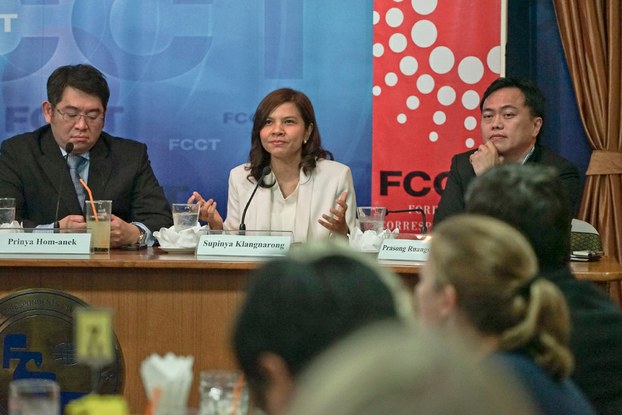
Image: "Activists" complain about Thailand's alleged "single gateway" plan to control domestic Internet infrastructure, while Facebook attempts to construct a global "single gateway" it controls, completely unopposed by these same groups - groups generally funded by the US State Department and Open Society, two partners Facebook has worked with in the past and groups that have themselves taken part in training assisted or sponsored by Facebook. . 

Telecom and information technology, like food, water, energy, and a standing army, are essential building blocks for national security and prosperity. Handing the responsibility of any of these over to either a foreign nation or a foreign corporation - or both - is the relinquishing of one's sovereignty and the compromising of one's national security.

Nations and their people must develop their own Internet infrastructure. For Mark Zuckerberg and his government-connected corporation Facebook to presume they are the sole solution to "connecting the world" is but a modern-day version of "The White Man's Burden" - those nations subjected to it subordinated to this domineering arrogance and the self-serving schemes that underpin it.

Facebook's Internet.org is a wake-up call for developing nations to stand up and invest in modern day essential infrastructure - including domestic versions of social networks like Facebook - to ensure they are as safe in the field of information as their conventional armies keep them on the field of battle.

Tony Cartalucci, Bangkok-based geopolitical researcher and writer, especially for the online magazineNew Eastern Outlook�.